
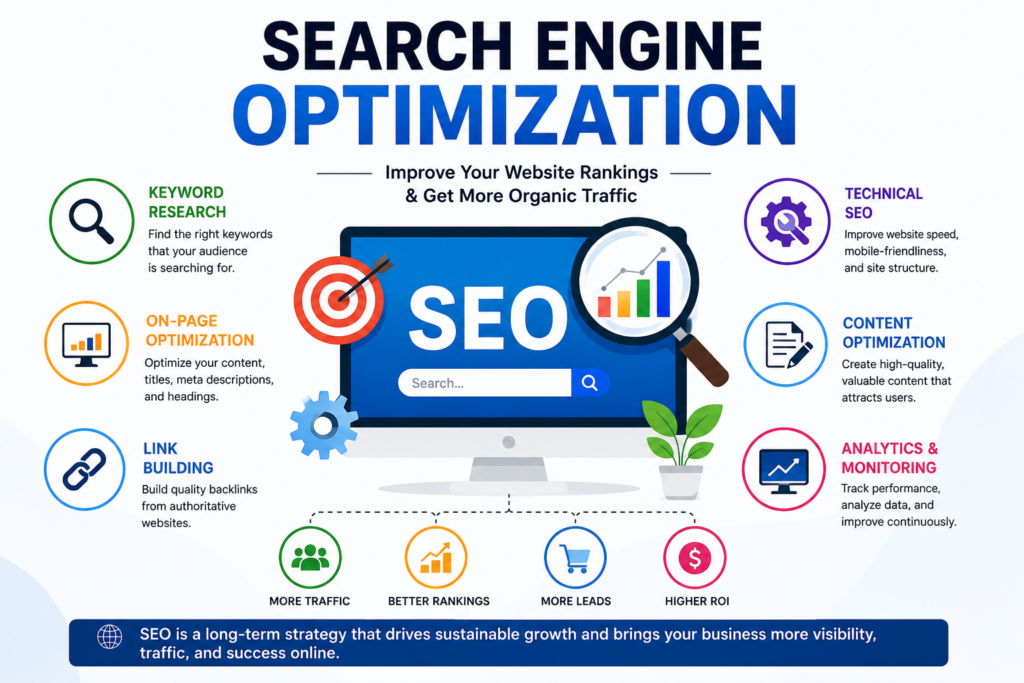
Search Engine Optimization: Types, Benefits, And Why It Matters For Business Growth
Introduction To Search Engine Optimization
In today’s online world, businesses need more than just a website to attract customers. People search on Google every day to find products, services, answers, and local businesses. If your website does not appear in those search results, you may lose valuable traffic and business opportunities. This is where Search Engine Optimization becomes important.
Search Engine Optimization, commonly called SEO, is the process of improving a website so it ranks higher in search engine results for relevant keywords. The goal of SEO is to increase website visibility, attract organic traffic, and help businesses generate leads, inquiries, and sales without relying only on paid advertising.
SEO is one of the most effective long-term digital marketing strategies because it helps businesses reach users who are already searching for what they offer. By optimizing website content, technical structure, and online authority, businesses can improve their search presence and build sustainable growth.
What Is Search Engine Optimization?
Search Engine Optimization is the practice of making a website more search-engine friendly and user-friendly so it can rank better on platforms like Google. SEO involves improving different elements of a website such as keywords, content, page structure, loading speed, backlinks, and mobile usability.
When someone searches for a service or product, search engines try to show the most relevant and useful results. SEO helps businesses align their websites with these ranking factors, making it easier for search engines to understand the website and show it to the right audience.
Why Search Engine Optimization Is Important
SEO is important because it helps businesses gain visibility where customers are actively searching. A well-optimized website can attract more traffic, improve trust, and generate better quality leads.
Key Benefits Of SEO
- Improves website visibility on Google
- Increases organic traffic without paying for every click
- Builds trust and brand authority
- Helps target customers actively searching for services
- Improves user experience and website structure
- Supports long-term online growth
- Increases leads, inquiries, and conversions
Types Of Search Engine Optimization
SEO is not just one single activity. It includes multiple strategies that work together to improve a website’s performance. Below are the major types of Search Engine Optimization every business should know.
1. On-Page SEO
On-Page SEO refers to all the optimization activities done directly on the website pages. The purpose of on-page SEO is to help search engines understand the page content and improve the user experience.
Key Elements Of On-Page SEO
- Keyword optimization in content
- SEO-friendly title tags and meta descriptions
- Proper heading structure using H1, H2, and H3 tags
- Image optimization with alt text
- Internal linking between relevant pages
- URL optimization
- High-quality and relevant content creation
On-page SEO ensures that every page clearly targets a topic and provides useful information to visitors.
2. Off-Page SEO
Off-Page SEO includes activities performed outside the website to improve its authority and trust. Search engines consider backlinks and external brand signals as indicators of a website’s credibility.
Key Elements Of Off-Page SEO
- Backlink building from relevant websites
- Guest posting
- Brand mentions on other websites
- Social sharing and promotion
- Directory submissions
- Online reputation building
Off-page SEO helps search engines see your website as trustworthy and valuable, which can improve rankings over time.
3. Technical SEO
Technical SEO focuses on the backend structure and performance of a website. It ensures that search engines can crawl, index, and understand website pages effectively.
Key Elements Of Technical SEO
- Website speed optimization
- Mobile responsiveness
- Secure HTTPS website
- XML sitemap creation
- Robots.txt optimization
- Fixing crawl errors and broken links
- Structured site architecture
- Canonical tags and indexing control
Technical SEO creates a strong foundation for better rankings and a smoother user experience.
4. Local SEO
Local SEO is important for businesses that want to attract customers from a specific city or area. It helps businesses appear in local search results such as “digital marketing agency near me” or “SEO services in Hyderabad.”
Key Elements Of Local SEO
- Google Business Profile optimization
- Local keyword targeting
- Location-specific landing pages
- NAP consistency (Name, Address, Phone Number)
- Customer reviews and ratings
- Local business citations
Local SEO is highly useful for agencies, restaurants, clinics, service providers, and all location-based businesses.
5. Content SEO
Content SEO focuses on creating high-quality, useful, and keyword-targeted content that helps a website rank for relevant search terms. Search engines prefer content that answers user questions clearly and provides value.
Examples Of Content SEO
- Blog posts
- Service pages
- Landing pages
- FAQ pages
- Product descriptions
- Informational guides
Content SEO supports both rankings and engagement by helping businesses communicate clearly with their audience.
6. E-Commerce SEO
E-Commerce SEO is specifically designed for online stores and product-based websites. It helps product pages, category pages, and shopping content rank in search results.
Key Elements Of E-Commerce SEO
- Product page optimization
- Category page SEO
- Product descriptions with keywords
- Schema markup for products
- Review integration
- Optimized navigation and filters
E-commerce SEO helps online stores attract buyers who are actively searching for products.
How Search Engine Optimization Works
Search Engine Optimization works by improving different signals that search engines use to rank pages. These signals include relevance, content quality, page experience, authority, and technical performance.
SEO Process Usually Includes
- Keyword research
- Competitor analysis
- Website audit
- On-page optimization
- Technical fixes
- Content creation
- Backlink strategy
- Local SEO improvements
- Performance tracking and reporting
SEO is not a one-time task. It is an ongoing process that requires regular updates, optimization, and monitoring.
Important SEO Ranking Factors
Search engines use many ranking factors to decide where a page should appear in results. While algorithms are complex, some factors are consistently important.
Major SEO Ranking Factors
- Relevant keyword usage
- High-quality original content
- Page loading speed
- Mobile-friendly design
- Secure website with HTTPS
- Backlinks from trusted websites
- Proper internal linking
- User engagement signals
- Technical health of the website
- Local relevance for local searches
Businesses that focus on these factors have a better chance of ranking well.
SEO And User Experience
SEO is not only about search engines. It is also about creating a better experience for users. A fast, well-structured, and informative website helps visitors stay longer, explore more pages, and take action.
Good SEO improves:
- Website readability
- Navigation and structure
- Mobile usability
- Page speed
- Content clarity
- Trust and credibility
When users have a positive experience, search engines are also more likely to value the website.
How SEO Helps Businesses Grow
SEO supports business growth by bringing the right audience to a website at the right time. People who search on Google usually have a clear purpose, such as finding information, comparing services, or making a purchase. If your website ranks for those searches, you have a better chance of gaining leads and customers.
Business Benefits Of SEO
- More website visitors
- Better lead generation
- Higher brand awareness
- Improved online trust
- Reduced dependency on paid ads
- Better return on long-term marketing investment
SEO helps businesses create a stable online presence that continues to deliver results over time.
Common SEO Mistakes To Avoid
While SEO is powerful, some mistakes can reduce performance and rankings.
Avoid These SEO Mistakes
- Keyword stuffing
- Thin or duplicate content
- Slow-loading website pages
- Missing title tags and meta descriptions
- Poor mobile experience
- Broken links and crawl errors
- Low-quality backlinks
- Ignoring local SEO for local businesses
- Not updating outdated content
Avoiding these mistakes helps maintain better SEO performance and user experience.
Conclusion
Search Engine Optimization is one of the most valuable strategies for businesses that want long-term online growth. It helps websites rank higher, attract relevant traffic, build authority, and generate leads without depending entirely on paid ads. From On-Page SEO and Off-Page SEO to Technical SEO, Local SEO, and Content SEO, each type plays an important role in improving website performance.
A well-planned SEO strategy helps businesses stay visible in a competitive digital market and connect with customers who are actively searching online. Whether you are a small business, service provider, agency, or eCommerce brand, investing in Search Engine Optimization can create lasting value for your website and business growth.