
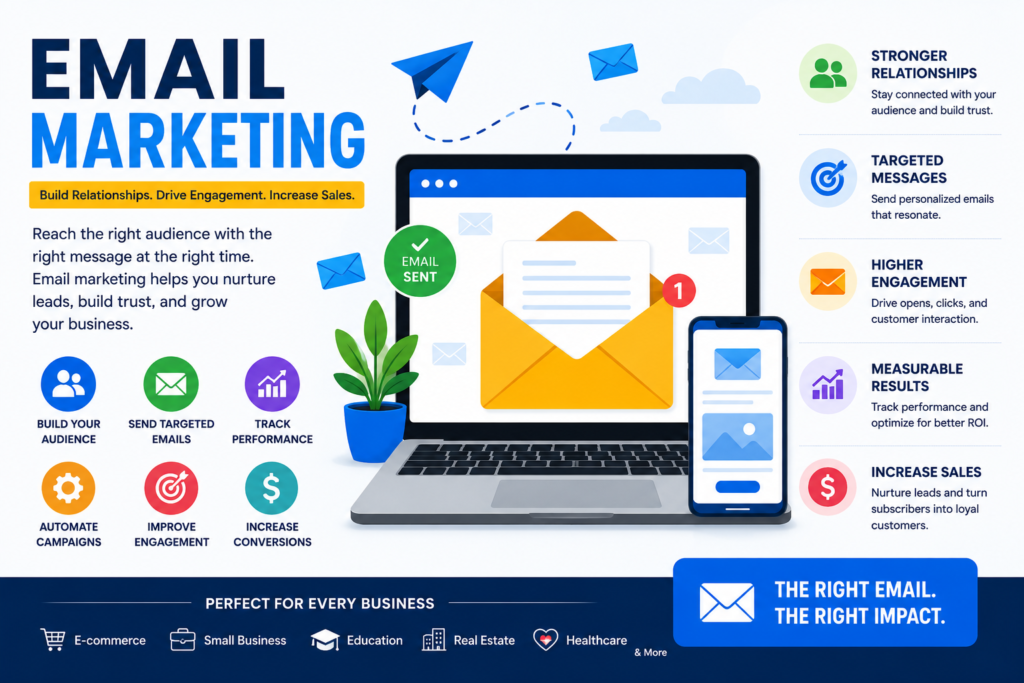
In today’s digital marketing landscape, businesses need reliable ways to connect with customers, build trust, and generate repeat engagement. While search engine optimization and paid advertising help attract new visitors, email marketing remains one of the most effective channels for building long-term customer relationships and turning interest into action. It allows businesses to communicate directly with their audience, share valuable updates, promote offers, and guide potential customers through the buying journey in a personalized and measurable way.
Email marketing is the process of sending targeted emails to a group of subscribers or customers for the purpose of building relationships, increasing engagement, promoting products or services, and supporting business growth. Unlike many other marketing channels, email gives businesses direct access to people who have already shown interest in their brand. Whether someone subscribed through a website form, downloaded a resource, made a purchase, or signed up for updates, email marketing creates an opportunity to stay connected and deliver relevant content over time.
One of the biggest advantages of email marketing is that it supports relationship building at every stage of the customer journey. A new visitor may subscribe to a newsletter to learn more about a business, while an existing customer may receive product updates, service reminders, or exclusive offers. Businesses can use email to educate, nurture, and re-engage people without depending entirely on social media algorithms or paid advertising budgets. Because the audience has already chosen to receive communication, email marketing often creates stronger engagement than broad promotional campaigns.
Email marketing is also known for its cost-effectiveness. Compared with many other digital channels, it can deliver a high return on investment when managed well. Businesses do not need a large advertising budget to send useful campaigns to their subscriber list. Instead, the focus is on building a quality audience, segmenting contacts properly, and sending relevant messages that encourage action. For small businesses, startups, service providers, and eCommerce brands, email marketing can be one of the most affordable ways to maintain customer communication and improve repeat business.
A strong email marketing strategy starts with building the right subscriber list. Instead of sending emails to random contacts, businesses should focus on growing an audience of people who genuinely want to hear from them. This can happen through newsletter sign-up forms, downloadable resources, lead magnets, webinar registrations, free consultations, product purchases, or gated content. A quality email list is important because engaged subscribers are more likely to open emails, click links, and respond to offers. List quality matters more than list size when the goal is meaningful engagement and conversions.
Segmentation is one of the most valuable features of email marketing. Not every subscriber has the same needs, interests, or stage in the buying process. By segmenting an email list, businesses can send more relevant content to specific groups. For example, new subscribers may receive a welcome series, past customers may receive loyalty offers, and users who abandoned a cart may receive reminder emails. A B2B company may segment by industry or service interest, while an eCommerce store may segment by purchase behavior or product category. Better segmentation usually leads to better open rates, click-through rates, and conversion performance.
Personalization also plays a major role in successful email marketing. People are more likely to engage with emails that feel relevant to them rather than generic mass messages. Personalization can include using the subscriber’s name, recommending products based on past activity, sending location-specific updates, or creating automated follow-up sequences based on user behavior. Personalized email campaigns help businesses build stronger connections with their audience because the communication feels more useful and timely.
There are many types of email marketing campaigns, and each one supports a different business objective. Welcome emails are used to introduce new subscribers to the brand and set expectations for future communication. Newsletter emails keep audiences updated with news, blog posts, company updates, and educational content. Promotional emailshighlight offers, discounts, product launches, or service packages. Lead nurturing emails guide potential customers toward a decision by sharing helpful information and trust-building content over time. Transactional emails confirm actions such as purchases, registrations, or account activity. Re-engagement emails help bring inactive subscribers back into the customer journey. Each type of email has a different role, and together they create a complete communication system for business growth.
Automation makes email marketing even more powerful. Instead of manually sending every message, businesses can create automated workflows that respond to user behavior. For example, a new subscriber can automatically receive a welcome email sequence, an abandoned cart user can receive a reminder email, and a customer who downloads a guide can enter a follow-up educational series. Automation saves time while making communication more consistent and relevant. It also helps businesses stay connected with leads and customers at the right moment without needing constant manual effort.
Content quality is another important factor in email marketing success. A good email should provide value, not just promotion. If every email only pushes a sale, subscribers may lose interest or unsubscribe. Businesses should balance promotional content with useful information such as tips, guides, updates, resources, case studies, or answers to common customer questions. A strong subject line, clear message, engaging design, and a focused call to action all contribute to better email performance. Emails should be easy to read, visually clean, mobile-friendly, and relevant to the audience segment receiving them.
Email marketing also supports lead nurturing in a way that many other channels cannot. Not every visitor becomes a customer immediately. Some people need time to understand the service, compare options, and build trust before taking action. Email allows businesses to continue that conversation over days or weeks through educational and value-driven messages. This is especially useful for service businesses, B2B companies, coaching brands, agencies, and businesses with longer sales cycles. A well-planned email sequence can move a lead from initial interest to final conversion more effectively than a single sales message.
For eCommerce businesses, email marketing is especially valuable because it supports repeat purchases and customer retention. Brands can use email to promote new arrivals, send restock alerts, recommend related products, share seasonal campaigns, and reward loyal customers. Automated emails such as cart abandonment reminders, post-purchase follow-ups, and review requests can also increase revenue and improve the customer experience. Because email reaches people who already know the brand, it often becomes one of the strongest channels for repeat sales.
Measuring performance is one of the reasons email marketing remains such a powerful business tool. Businesses can track metrics such as open rates, click-through rates, bounce rates, unsubscribe rates, conversions, and revenue generated from campaigns. These insights help marketers understand what content resonates, which subject lines perform best, which audience segments engage more, and what type of offers drive action. Over time, this data can be used to improve campaign timing, messaging, segmentation, and automation flows.
Even though email marketing is highly effective, it works best when integrated with a larger digital marketing strategy. SEO can attract organic visitors who later subscribe to a mailing list. Google Ads and Meta Ads can generate leads that enter an email nurturing sequence. Blog content can be repurposed into newsletters. Landing pages can collect sign-ups for lead magnets or free consultations. When email marketing is connected with website content, paid campaigns, and customer data, it becomes much more powerful as a long-term growth channel.
Businesses should also pay attention to deliverability and list hygiene. Sending emails too frequently, using misleading subject lines, or emailing inactive contacts repeatedly can hurt engagement and reduce inbox placement. Maintaining a clean list, using permission-based sign-ups, removing inactive subscribers when necessary, and sending relevant content all help improve deliverability and long-term performance. Trust matters in email marketing, and brands that respect the subscriber’s attention usually see better results.
For businesses looking to improve engagement, build stronger customer relationships, and generate long-term value from their audience, email marketing remains one of the most effective digital strategies available. It gives brands direct communication with interested users, supports automation and personalization, and helps nurture leads into loyal customers. Whether the goal is to promote services, increase repeat purchases, share educational content, or maintain brand visibility, email marketing provides a flexible and measurable way to stay connected with the right audience.
As digital competition continues to grow, businesses need marketing channels that are not only effective but also sustainable. Email marketing offers exactly that. It helps brands build owned audience relationships rather than relying only on third-party platforms. With the right strategy, segmentation, content, and automation, email marketing can become a major driver of engagement, retention, and business growth for years to come.