
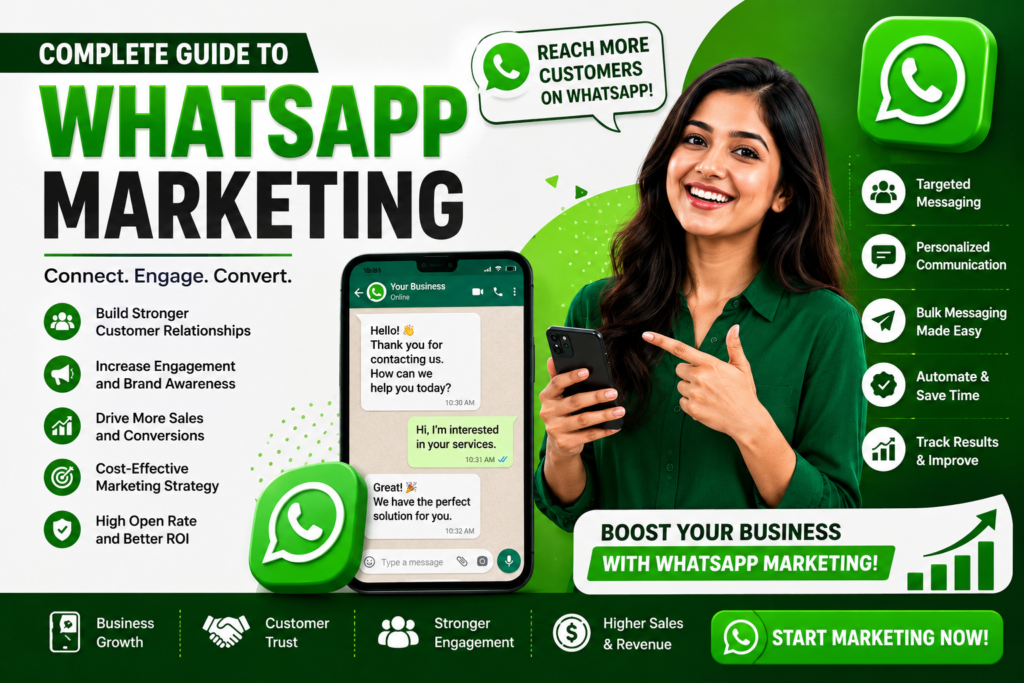
WhatsApp marketing has become one of the most effective digital marketing strategies for businesses looking to connect directly with customers. With over 2 billion users worldwide, WhatsApp provides a powerful platform for personalized communication, lead generation, customer support, and sales growth.
Unlike traditional marketing channels, WhatsApp offers instant communication, high open rates, and better customer engagement. Businesses of all sizes can use WhatsApp to build relationships, increase conversions, and improve customer satisfaction.
What is WhatsApp Marketing?
WhatsApp marketing is the practice of using WhatsApp to promote products, services, and brands while engaging with customers through direct messaging. Businesses use WhatsApp to send updates, promotional offers, product information, appointment reminders, and customer support messages.
The platform enables brands to create meaningful conversations with customers in a fast and personalized manner.
Why WhatsApp Marketing is Important
High Open Rates
WhatsApp messages typically achieve much higher open rates than email marketing campaigns. Most messages are read within minutes of delivery.
Direct Customer Communication
Businesses can communicate directly with customers without relying on complex algorithms or paid advertising platforms.
Better Engagement
Customers are more likely to respond to WhatsApp messages than emails or social media posts.
Cost-Effective Marketing
WhatsApp marketing is affordable and delivers excellent return on investment for businesses.
Benefits of WhatsApp Marketing
1. Personalized Communication
Businesses can send customized messages based on customer interests and preferences.
2. Lead Generation
WhatsApp helps collect inquiries and convert prospects into customers through direct conversations.
3. Improved Customer Support
Provide instant responses and solve customer problems quickly.
4. Higher Conversion Rates
Personalized interactions often result in increased sales and conversions.
5. Strong Customer Relationships
Regular communication helps build trust and customer loyalty.
How to Create a WhatsApp Marketing Strategy
Set Clear Goals
Define your objectives:
- Generate leads
- Increase sales
- Improve customer support
- Boost customer retention
- Build brand awareness
Identify Your Target Audience
Understand:
- Customer demographics
- Interests
- Purchasing behavior
- Common problems
Build an Opt-In List
Always collect customer permission before sending promotional messages.
Methods include:
- Website forms
- Landing pages
- QR codes
- Social media campaigns
Best WhatsApp Marketing Techniques
Welcome Messages
Automatically greet new customers and introduce your business.
Promotional Campaigns
Share:
- Special discounts
- Product launches
- Seasonal offers
- Exclusive deals
Broadcast Lists
Send messages to multiple contacts without creating group chats.
Customer Support
Provide real-time assistance and improve customer satisfaction.
Product Catalogs
Showcase products directly through WhatsApp Business features.
WhatsApp Business Features
Business Profile
Include:
- Business name
- Description
- Website
- Email address
- Operating hours
Quick Replies
Save time by creating predefined responses to common questions.
Automated Messages
Set up:
- Welcome messages
- Away messages
- Follow-up messages
Labels
Organize customers based on lead status and purchasing behavior.
WhatsApp Marketing for Lead Generation
Website Integration
Add WhatsApp buttons on:
- Home page
- Contact page
- Landing pages
- Blog posts
Click-to-WhatsApp Ads
Use ads on social media platforms that direct users to WhatsApp conversations.
Lead Qualification
Ask questions to understand customer needs and identify high-quality leads.
SEO and WhatsApp Marketing
While WhatsApp itself does not directly impact search engine rankings, it can support SEO efforts by:
- Increasing website traffic
- Improving customer engagement
- Boosting brand awareness
- Generating repeat visitors
- Enhancing user experience
Businesses can also add WhatsApp chat widgets to websites to improve conversion rates.
Common WhatsApp Marketing Mistakes
Avoid these mistakes:
Sending Too Many Messages
Excessive messaging can annoy customers and increase unsubscribe rates.
Ignoring Customer Responses
Always respond quickly to customer inquiries.
Lack of Personalization
Generic messages often receive lower engagement.
Poor Timing
Send messages during business hours when customers are most active.
Not Tracking Performance
Monitor campaign performance regularly.
Key Metrics to Measure
Track these important metrics:
- Message Open Rate
- Response Rate
- Conversion Rate
- Customer Retention Rate
- Click-Through Rate
- Lead Generation Performance
- Revenue Generated
Advanced WhatsApp Marketing Tips
Use Rich Media
Send:
- Images
- Videos
- PDFs
- Product catalogs
Segment Your Audience
Create separate lists based on:
- Customer interests
- Purchase history
- Location
- Behavior
Automate Follow-Ups
Use automation to nurture leads and improve customer engagement.
Integrate CRM Systems
Connect WhatsApp with customer relationship management software for better tracking and personalization.
Future of WhatsApp Marketing
As businesses continue adopting conversational marketing, WhatsApp will become even more important for customer communication. AI-powered automation, chatbots, and advanced analytics will help brands create more personalized experiences and achieve higher conversion rates.
Conclusion
WhatsApp marketing is one of the most effective ways to engage customers, generate leads, and increase sales. By using personalized communication, automation, and strategic campaigns, businesses can build stronger customer relationships and achieve long-term growth.
Companies that implement WhatsApp marketing correctly can enjoy higher engagement, better customer satisfaction, and improved business results in today’s competitive digital landscape.